The Most Expensive Line of Code Is the One Written Too Soon
Most failed software projects do not fail during development. They fail before it — in the gap between a business need and a clear, buildable plan. A founder or business owner feels the pressure to move fast, posts a job listing or signs a contract with a dev shop, and within weeks discovers that the real problem was never about code at all.
If you are asking yourself am I ready to hire a developer, that question alone is a good sign. It means you are thinking before spending. This post will walk you through five specific signs that you are not quite ready — and more importantly, the foundational work that fixes each one so that when you do bring a developer on, every dollar and every hour lands on solid ground.
Sign 1: You Cannot Describe What the Software Should Do Without Using the Word “Everything”
When someone says “I need an app that does everything my business needs,” what a developer hears is: this project has no boundaries, no priorities, and no definition of done. Scope is not a nice-to-have. It is the single biggest predictor of whether a custom software project ships on budget or spirals.
This does not mean you need a 40-page requirements document. But you do need to answer a handful of grounded questions:
- What is the one workflow or problem this software must solve on day one?
- Who will use it — and what does their current process look like without it?
- What does “working” look like in specific, observable terms?
The Groundwork That Fixes It
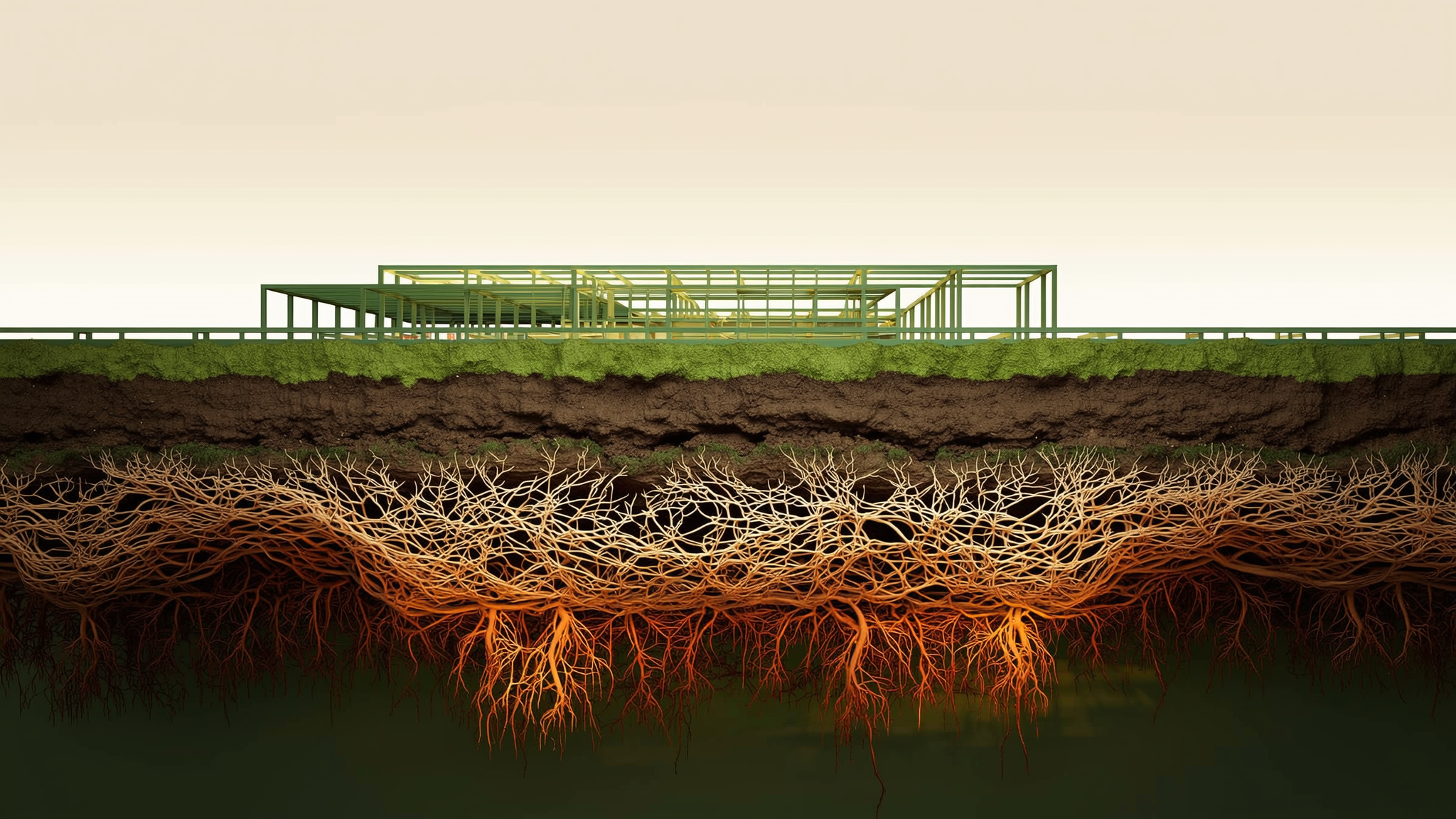
Before hiring a web developer, invest time in discovery — the deliberate process of mapping goals, constraints, and priorities before a single line of code gets written. At FigTree, this is where every engagement starts: underground, in the soil work of understanding what you actually need versus what you think you want. A focused discovery session turns a foggy vision into a scoped, sequenced plan. That plan becomes the foundation a developer can actually build on.
Sign 2: You Have No Idea What Your Current Technology Can (or Cannot) Do
Maybe you are running your operations across a patchwork of spreadsheets, a legacy CRM, a payment processor, and two or three SaaS tools that were each adopted in a different year by a different person. You know the setup is not working, but you could not draw a diagram of how data flows between these systems if your business depended on it — and it does.
Hiring a developer into this environment is like hiring a contractor to add a second story to a house when no one has inspected the foundation. They will either build something that collapses under load, or they will spend your budget just figuring out what exists before they can design anything new.
The Groundwork That Fixes It
A technology audit does not have to be a massive undertaking. It means documenting what systems you use today, how they connect (or do not connect), where data lives, and which manual processes are actually bridging gaps between disconnected tools. This audit becomes the map that lets a developer architect something integrated and scalable from day one, rather than bolting yet another tool onto an already fragile stack.
This is the kind of work that fits naturally into a structured discovery process — and the kind of work that pays for itself many times over once development begins.
Sign 3: You Cannot Explain Who Owns This Project Internally
Every custom software project needs a decision-maker on the business side — someone who can answer questions, approve direction, test features, and say “yes, that is what we need” or “no, that misses the point.” When that person does not exist, or when ownership is spread across three people who do not agree, development stalls.
This is not a technology problem. It is an organizational one. And no amount of technical talent can compensate for it.
The Groundwork That Fixes It
Before you begin evaluating your small business technology readiness, get clear on governance:
- Who is the single point of accountability? This person does not need to be technical. They need to be empowered to make decisions and available to make them promptly.
- What is the approval process? If every design decision requires a committee meeting, your project timeline will double.
- Who are the end users, and will they be involved in testing? Software built without user input tends to be software that users avoid.
Clarifying ownership is foundational — the kind of alignment work that happens in the discovery phase, not the development phase. Getting it right early means your developer can focus on building, not waiting.
Sign 4: Your Budget Is Based on a Guess, Not a Plan
A common pattern: a business owner sets aside a round number — say, $15,000 — because it “feels right” for what they want built. But there has been no scoping, no technical assessment, and no conversation about trade-offs. That number has no relationship to the actual complexity of the work.
This creates two failure modes. Either the budget is far too low, and the project gets cut short before it delivers real value — or the budget is undefined enough that costs creep upward with no guardrails, and the business owner ends up spending more than intended on features that were never prioritized.
The Groundwork That Fixes It
A meaningful budget comes from a meaningful scope. That is why how to prepare for a custom software project always starts with discovery, not pricing. When you have a clear map of what needs to be built, in what sequence, and with what trade-offs, you can make grounded financial decisions:
- Phase the work. Not everything needs to ship at once. A discovery process helps you identify the minimum viable scope — the smallest build that delivers real value — and plan subsequent phases from there.
- Understand the trade-offs. Custom-built versus off-the-shelf. Speed versus flexibility. Every decision has a cost, and knowing those costs before development starts is how budgets stay honest.
- Build in margin. Every experienced builder knows that surprises happen. A plan rooted in real complexity estimates leaves room for them without derailing the entire project.
Sign 5: You Are Solving a Technology Problem That Is Actually a Process Problem
This is the most subtle sign, and the most expensive to miss. Sometimes the pain that feels like it needs custom software — slow turnaround, errors, bottlenecks — is actually caused by a broken or missing process. Building software on top of a broken process does not fix the process. It automates the dysfunction, makes it faster, and makes it harder to change later.
Consider this: a team manually re-entering data from one system into another, making errors along the way. The instinct is to build an integration or a custom tool. But the deeper question is: why are there two systems in the first place? Is the duplication necessary, or is it a legacy artifact that no one has questioned? Sometimes the right answer is not new code — it is a redesigned workflow, a consolidated tool, or even a well-structured spreadsheet with clear ownership.
The Groundwork That Fixes It
Before commissioning a build, map the process end to end. Identify where bottlenecks actually occur, distinguish between problems caused by the tools and problems caused by how the tools are used, and ask whether the simplest fix is technical or operational.
This is precisely the kind of question a project discovery checklist should surface. A good discovery process does not assume the answer is always more software. It designs the right solution — which might be a custom build, an automation connecting existing tools, a reconfigured workflow, or some combination of all three.
The Common Thread: Discovery Before Development
Each of these five signs points to the same root cause — skipping the foundational work that makes development successful. Scope, systems, governance, budget, process: these are not glamorous topics. They are not the exciting part of building something new. But they are the soil that determines whether what you build will flourish or wither.
The pattern we see repeatedly is straightforward: when a business invests in discovery and architecture first — when the goals are mapped, the current state is understood, the priorities are sequenced, and the trade-offs are made explicit — development becomes dramatically more efficient. Fewer rewrites. Fewer misunderstandings. Fewer moments where a business owner looks at a delivered feature and says, that is not what I meant.
That is why at FigTree Development, we do not start with code. We start with a conversation. We call it the soil work — the foundational discovery that maps where you are, where you are trying to grow, and what needs to be true before building begins. It is not a formality. It is the most high-value phase of any engagement, and it is designed to give you clarity whether you build with us or with someone else.
A Simple Readiness Checklist
Before you hire a developer — any developer — see how you measure against these five foundations:
- Scope: Can you describe the core problem and the desired outcome in specific, concrete terms?
- Systems: Do you have a clear picture of your current technology landscape and how data flows through it?
- Ownership: Is there a single decision-maker empowered to guide the project on the business side?
- Budget: Is your budget grounded in scoped complexity, not a gut feeling?
- Process: Have you confirmed that the problem is genuinely a technology gap, not a workflow gap?
If you answered “no” to even one of these, you are not behind — you are just at the stage where discovery work will save you the most time and money. The best time to do that work is before you sign a development contract, not after.
Ready to Do the Groundwork First?
If this checklist surfaced some gaps, that is exactly what it was designed to do. The next step is not to hire faster — it is to build the foundation that makes hiring the right move at the right time.
At FigTree Development, our Discovery and Strategy process is built for this exact moment. We help you map your goals, understand your current state, and architect a plan that is scoped, sequenced, and grounded in what your business actually needs — not what sounds impressive on a proposal.
No pitch. No pressure. Just a conversation about where you are and what the right next step looks like.
Book a free 20-minute discovery call and let us help you plant something real.